 Heidi
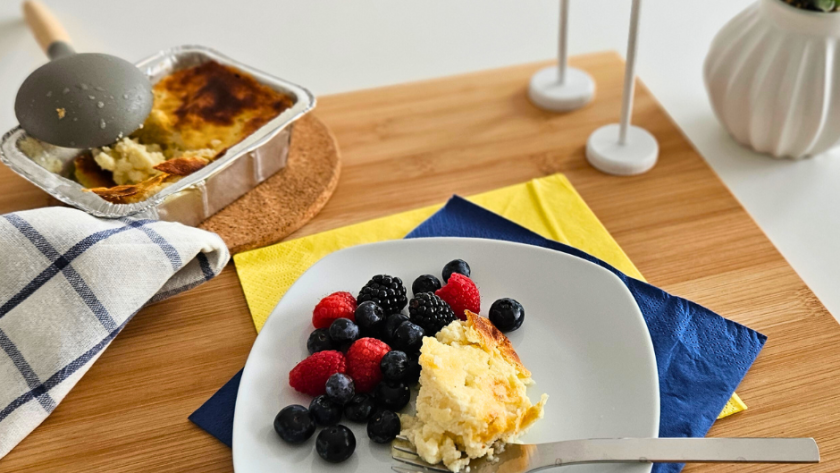
Heidi The ostkaka, literally translating to ‘cheese cake’, is one of Sweden’s most cherished and traditional desserts. Yet, don’t let the name fool you: this delicate treat has virtually nothing in common with the dense, creamy American-style cheesecake. On many a Swedish celebratory table, the ostkaka is an absolutely essential sight, boasting a long, rich history and a unique, light texture that simply melts in the mouth.
The history of Swedish cheesecake (ostkaka)
The ostkaka is most strongly associated with two distinct Swedish regions: Småland in the south and Hälsingland in the country’s central belt. While the fundamental concept remains consistent, there are subtle, characterful differences between the two regional recipes—differences I’ve learned to appreciate on my travels.
The oldest known written proof of the ostkaka stretches back as far as the 1520s. It was mentioned in a list of dishes served on New Year’s Day in the household of Bishop Hans Brask in Linköping. To think this dessert has been part of a proud culinary tradition for nearly 500 years makes every bite feel deeply connected to Swedish heritage.
A traditional craft: from milk to delicious Swedish cheese cake
The traditional preparation of ostkaka is a fascinating, artisanal process. Essentially, it is created by adding rennet to a warm milk and flour mixture. This process curdles the milk, forming the crucial curds (cheese), which are then mixed with eggs, cream, sugar, and almonds, before finally being baked.
However, many home cooks today—understandably, given our busy lives—opt for a far quicker and simpler method by using ready-made cottage cheese as the base, bypassing the time-consuming rennet process.
A defining characteristic of a true ostkaka—and what makes it stand apart from nearly every other cheese cake—is the total absence of a pastry or biscuit crust.
The regional tastes: Småland vs. Hälsingland
The two main variants of the Swedish ostkaka differ delicately in flavour profile and preparation:
The Småland Ostkaka
The Småland version is typically sweeter and is distinguished by the inclusion of both sweet and bitter almonds. Those bitter almonds are paramount; they provide the subtle, distinctive, and slightly earthy aroma that sets this particular cheese cake apart.
Historically, serving ostkaka in Småland was a sign of status. When the cake was baked in a large, round dish, the creamiest and most prized mouthful was considered to be the centre. Guests were traditionally invited to take their portion directly from the middle.
The Hälsingland Ostkaka
The Hälsinge ostkaka is generally less sweet than its southern counterpart. A tiny pinch of saffron is sometimes added, both for its beautiful golden colour and to introduce an extra dimension of flavour. This version is traditionally enjoyed with a generous splash of warm cream. I was fortunate enough to sample this precise recipe when I visited the incredible Decorated Farmhouses of Hälsingland, a memory I still cherish.
The perfect serving: how to enjoy your ostkaka
The way ostkaka is served is absolutely critical to the flavour experience:
- Temperature is key: ostkaka is traditionally served lukewarm or at room temperature. It must never be piping hot, as that would dull its delicate flavours, and never too cold, which would make the texture too firm.
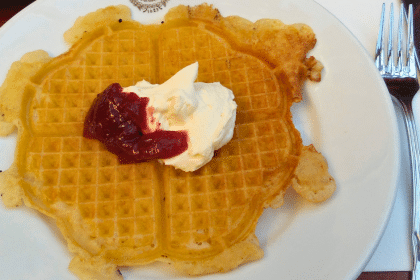
- Classic toppings: The most popular way to eat Swedish cheesecake is with a dollop of whipped cream or ice cream and a spoonful of jam. The most common jams are traditional lingonberry (lingonsylt), strawberry, or cloudberry jam.
- A Christmas essential: Swedish cheese cake is a beloved and indispensable dessert on the traditional Christmas buffet (julbord) in countless Swedish homes, where it is almost always paired with lingonberry jam.
Celebrate with Ostkakans Dag (Ostkaka Day)
The ostkaka is so beloved in Sweden that it even has its own national day! Ostkakans Dag is celebrated every year on 14 November, a date established by the non-profit organisation “Friends of Ostkaka” (Ostkakans vänner).
Today, the popularity of this authentic Swedish cheese cake means you can find it pre-made in almost every Swedish supermarket—a convenient option for parties and the festive season. You may even have spotted the popular Frödinge Ostkaka in the freezer section of your local IKEA store, a testament to its widespread appeal. If you haven’t, I highly recommend picking one up for a true taste of Sweden.