 Heidi
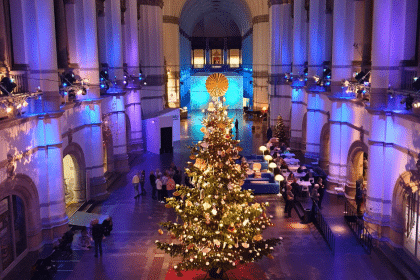
Heidi If you’re looking to embrace a Scandinavian Christmas, a journey into the world of Swedish Jul (Christmas) traditions is a must. While the North gets dark and cold in December, the festive season brings a welcome burst of light and warmth. Currently, I’m enjoying the Christmas spirit in Stockholm, and it’s the perfect time to share this dose of winter joy!
These unique Swedish customs, heavily focused on light and cosiness, are central to the holiday season. So, what exactly does a traditional Swedish Christmas look like?
The Build-Up: From Advent to St. Lucia
Advent and ‘Novent’
While in many places the run-up to Christmas can feel overshadowed, in Sweden, ‘första advent’ (First Advent) is a key date in the calendar. The Scandinavians are champions of ‘mys’ (cosiness), and the first Sunday of Advent is dedicated to making the home extra snug. They light the first of four special Advent candles (on top of all the other candles already burning!) and get stuck into baking ginger biscuits (pepparkakor). Gingerbread houses (pepparkakshus) are hugely popular, and well-wishes are shared on social media for a Happy First Advent. This is repeated over the following three Sundays.
The First Advent also marks the start of most Christmas markets.
A growing trend, ‘novent‘, is a mash-up of November and Advent, where people start putting up their winter decorations as early as the beginning of November.
Julkalendern: The Christmas Countdown
You can probably guess the meaning of ‘Julkalendern’—the Advent calendar. These calendars are found in nearly every Swedish household. But the Julkalendern is also an eagerly anticipated daily TV programme (a bit like a Christmas special) broadcast throughout December. Aimed at children, the whole family often gathers to watch the different story unfold each year. In Stockholm, the ‘Levande Julkalendern’ (Living Advent Calendar) sees a different ‘door’ open in the historic Gamla Stan every day.
St. Lucia’s Day
December 13th is the day of Sankta Lucia (St. Lucy). Historically the shortest day of the year before the calendar was adjusted, the festival has stayed put. This is considered the true launch of the Christmas season and is one of Sweden’s biggest traditions, almost as important as Midsommar (Midsummer).
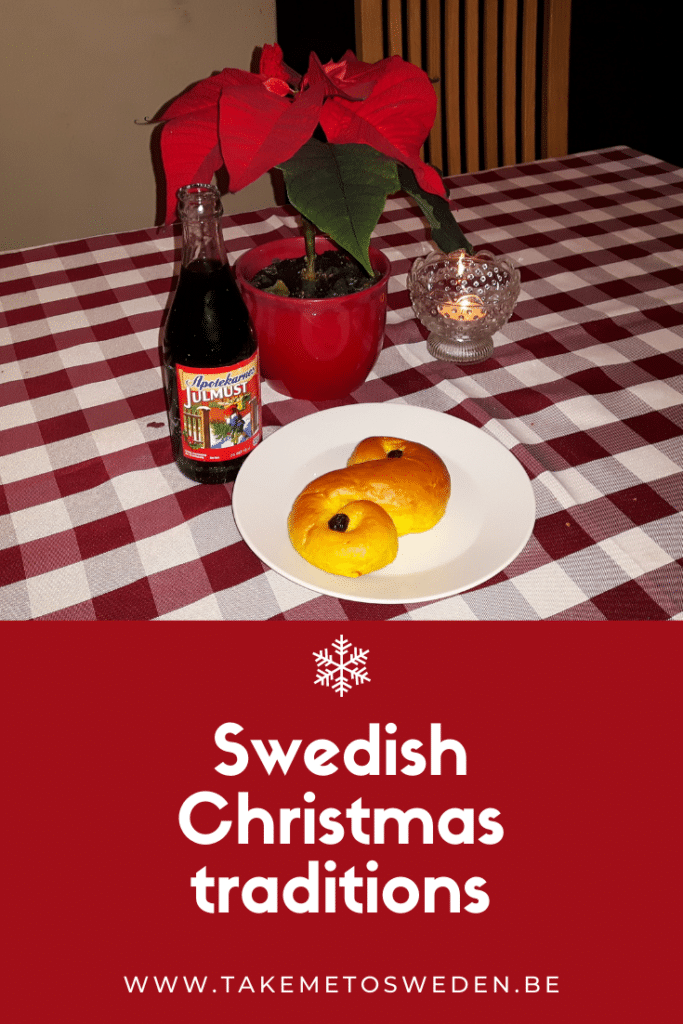
On Lucia morning, children wake their parents with a serenade of traditional Lucia songs and serve them sweet saffron buns (lussekatter). Every village and town holds a Lucia procession led by a young woman (the Lucia) wearing a beautiful wreath of candles on her head.
The Main Event: Christmas Eve and the Julbord
Julafton: Christmas Eve
The most significant day of the Swedish Christmas celebration isn’t Christmas Day, but December 24th, Christmas Eve (Julafton). The whole family gathers, and the main festivities kick off at 3 pm with a national tradition: watching Donald Duck (Kalle Anka). Every year since 1959, between 3 and 4 million Swedes tune in for the special, “From All of Us to All of You.”
After the broadcast, everyone prepares for the arrival of Santa Claus (Jultomten). Once the presents are opened, the focus moves to the traditional Christmas buffet (julbord).
Christmas Day and Boxing Day
Christmas Day (Juldagen) is a quieter affair. Families enjoy the leftovers from the julbord, perhaps venture out into any snow (though a guaranteed white Christmas is rare in Southern Sweden), and generally keep things cosy at home. Boxing Day (Annandag Jul) is either a continuation of the relaxed holiday or a return to normal life, though many head to the shops where the Christmas sales (mellandagsrea) begin.
The Swedish Christmas Feast: Julbord
Swedes are very protective of their traditions, and this is most evident in the Julbord (Christmas buffet). This extensive festive spread features the same classic dishes every year. The julbord is so popular you can book one in restaurants starting as early as mid-November.
A typical Julbord includes:
- Pickled herring (sill)
- Swedish meatballs (köttbullar)
- Beetroot salad
- Cured salmon (gravlax)
- Liver pâté
- Crispbread
- Janssons frestelse (a creamy potato and anchovy gratin)
- Gubbröra (an egg and anchovy mixture)
- The essential Christmas ham (julskinkan)
To drink, people enjoy mulled wine (glögg), Christmas beer (julöl), or julmust (a hugely popular Christmas soft drink, like a spiced cola). For dessert, the traditional choice is rice pudding (risgrynsgröt).
End of the Holidays: Tjugondedag Jul
While some families put up their Christmas tree during Advent, others wait until the day before Julafton. Many Swedes still source their tree directly from nature. Most trees stay up until the Twentieth Day of Christmas (tjugondedag Jul), also known as Knut’s Day (January 13th), which is when all the decorations are packed away for another year.
Want to infuse your home with that special Swedish Christmas feeling? Head to Ikea where you can find typical decorations, ingredients for baking biscuits, and even the famous julskinkan. Pair your saffron buns and gingerbread with a Spotify playlist of Swedish Christmas music to truly transport yourself to a Scandinavian winter wonderland!
Pin for later

I wonder if it’s possible for a Swedish family to invite me for Christmas? It would be great!
I am alone and live in England.